
Getting Hart County Court Records
Start by naming the court that handled the case. Who holds the file follows from that. Frankie Gray is the Hart County Clerk of Superior Court. Her office keeps Superior Court civil, criminal, juvenile, adoption, protective-order, and jury records. Probate Court holds estates, guardianships, marriage and firearm matters, plus traffic, game, and fishing files. Magistrate Court has lower civil cases, warrants, first appearances, bonds, and county-ordinance matters. Each city court keeps its own municipal file. Federal cases belong to the Middle District of Georgia, Athens Division.
Online research runs through the Hart ICON Case Search for Superior criminal and civil work. The system asks for a user ID and password, though. There is no guest registration and no anonymous case-number field. So call or visit the proper clerk, or mail a narrow written request. The Superior Clerk lists a fax and an email. Neither is confirmed for copy orders. Confirm before you send payment.
- Name the court, case type, approximate year, and case number or party name.
- Choose inspection, a plain copy, a certified copy, or an authenticated copy.
- Try the authorized online system, or contact the correct clerk by phone or at the counter.
- For mail, fax, or email, confirm current submission and payment rules first.
- Ask for the cost, delivery method, redaction status, and production date.
Hart Court Records at the Clerk
The Superior records hub sits at 185 West Franklin Street in Hartwell. Most records can be viewed during regular office hours, the office says. Counter inspection is what that promise covers. It says nothing about full online images or a public terminal. And records held by Probate, Magistrate, municipal, juvenile, or federal courts are simply not there. Plan on visiting in person.
Hart County Clerk of Superior Court
185 W. Franklin Street
Hartwell, GA 30643
P.O. Box 386
706-376-7189
Give the clerk enough detail to pull the file fast. A case number works best. Without one, bring more. Note the court, the year range, the case type, and the exact name spelling. The public email can confirm who holds the record and how to get it. The fax number is 706-376-1277. No Hart source confirms whether the fax accepts record orders. It is likewise unclear on electronic delivery, a drop box, prepayment, or a counter cutoff.
Court Record Types
Think of the docket or index as the case's table of contents. It lists the case number, type, parties, filings, hearings, status, and disposition. The full file sits behind that summary. Public filed material can include pleadings, motions, notices, subpoenas, orders, judgments, and exhibits. The Hart calendar is a separate layer. It shows scheduled Superior Court activity, but it is not the case file. A later order can change what it lists, too.
- Superior civil, criminal, family, adoption, jury, and protective-order files
- Probate records for estates, guardianships, and other Probate duties
- Magistrate civil and criminal-process records
- Municipal traffic and ordinance files held by the issuing city
- Certified copies authenticated by the custodian clerk
Property research runs on a different track. Kofile and GSCCCA cover deed and lien work, while ICON handles Superior criminal and civil document research. PeachCourt is the e-filing system for Hart Superior Court. Filing something there is not the same as searching a public file.
Three Hart Record Systems Differ
ICON, PeachCourt, and the real-estate services are separate systems, not one database. ICON's local page offers only login controls. PeachCourt manages filing workflow. Kofile and GSCCCA serve land-record research. The Georgia E-Access directory points toward providers, but Georgia has no single statewide public docket grid that replaces the Hart clerk.
| System | Hart County Role | Key Limit |
|---|---|---|
| ICON | Superior criminal and civil research | Observed screen is login-gated |
| PeachCourt | Mandatory Superior e-filing | Not a confirmed free guest search |
| Kofile / GSCCCA | Real-estate deed and lien research | Not the court case-file custodian |
When a system shows nothing, call the clerk. The case may sit in another court. It may be an older medium, restricted by law or order, or in need of staff-assisted research.
Inside a Hart County Court Record
A court record holds more than a docket line. The docket arranges events by date; each document carries its own text and legal effect. The exact Hart case-number pattern and ICON result labels sit behind login. No sample state number should be invented. Ask the clerk to confirm local shorthand.
| Case Number | The local identifier; Hart's public format was not verified. |
|---|---|
| Pleadings | Complaints, petitions, answers, motions, and filed responses. |
| Orders & Judgments | Signed rulings and decisions, distinct from a docket summary. |
| Docket Sheet | A dated sequence of filings, settings, and procedural events. |
| Hearings | Settings or court dates when publicly available and current. |
| Exhibits | Attachments that may be public, redacted, or restricted. |
Jurisdiction explains the difference. The PACER federal case locator uses federal number formats and fields, and those say nothing about how Hart state files are coded.
Choose the Right Hart Court Copy
Hart County clerks offer a plain copy, which simply reproduces a public document. A certified copy adds the clerk's own authentication. An exemplified or authenticated copy may call for more formal certification still. Say what the copy is for, then ask the clerk which product fits. A saved image of a page, a payment receipt, a vendor printout, or a scanned calendar is not automatically certified.
- Plain copy
- An uncertified reproduction for reading or reference.
- Certified copy
- A copy authenticated by the clerk who holds the original.
- Exemplified copy
- A formal authenticated product; Hart's process was not published.
- Transcript
- A written record of spoken proceedings, ordered through a separate process.
No Hart page publishes a transcript process, an audio-copy rule, or a full retention list. Ask whether an older item is a book, index, microfilm, scan, or archive. A 2022 scanning plan does not mean every historic file is online.
Older Hart Court Records Need Context
Hart County was created in 1853. Courthouse buildings followed in the 1850s, and fires struck in 1900 and 1967. The present courthouse was completed in 1971. That history shapes genealogy and older-case work. When a record is missing online, the reason may be an index boundary, a damaged source, or a physical format like a book or roll.
The Digital Library of Georgia courthouse history offers background, not a live docket. Begin with a year range and record type. Ask which index covers that era and whether staff can find a book, microfilm roll, paper jacket, or scan. Do not assume ICON holds every surviving historic record. Note: The 2025 digital-recording proposal does not create a public courtroom-audio archive.
Fees and Certified Copies
No fee schedule for Hart County court copies is posted publicly. That covers plain copies, certified documents, exemplification, staff searches, and ICON home access. Ask for a quote before you order anything. Georgia open-records guidance still gives you anchors. The first 15 minutes of search and retrieval are free. Copies may run up to 25 cents per page, and permitted labor charges can follow after that. One caution applies. A clerk product with court-specific fees may still control over the general guidance.
| Item | Verified Amount | Next Step |
|---|---|---|
| In-person inspection | Fee not published | Ask about inspection and staff help |
| Plain paper copy | Hart fee not located | Ask per-page cost |
| Certified copy | Hart fee not located | Ask document and certification cost |
| Exemplified copy | Hart fee not located | Confirm authentication and turnaround |
| ICON access or search | Terms not published | Call about authorized access |
Lawful search and retrieval costs can be charged, and the office need not build a new compilation for you. Get an estimate before any work begins.
Hart Record Requests in Three Days
Hart County requests run on a three-business-day response framework. That clock does not promise every record lands in your hands within three days. Put your request in writing, and the scope fixes itself. Name the custodian, the court, and the date range. Also list the document and the copy form you want. If production drags on, the response should spell out a timeline. And if material is withheld, ask which statute, rule, or order supports that choice.
Keep the request narrow: Ask for an existing docket sheet, order, or named filing. Georgia law does not require a new report from several records.
The Attorney General posts request guidance and an open-government FAQ, though sealing, juvenile confidentiality, and protected identifiers still apply.
Sealed Records and Public Access
Uniform Superior Court Rule 21 starts from a presumption of public access. Even so, a court can limit material by following the required process. Any order should say what is restricted, why, and for how long. Redaction of protected identifiers rests on Rule 21.6. Georgia law governs it too. So a public copy may still list a filing. It can withhold a Social Security number, financial data, a protected address, or other sensitive content.
Key Rules:
Uniform Superior Court Rule 21 sets the public-access presumption and restriction process.
O.C.G.A. § 9-11-7.1 addresses protected personal information.
O.C.G.A. § 50-18-71 guidance explains inspection, timing, and lawful cost principles.
Juvenile files move through an authorized route only, and JDEX is not a public Hart name search. A missing ICON result does not prove no case exists. It may simply point to a sealed, redacted, juvenile, archived, municipal, or probate file.
Federal Hart Records Belong in Athens
Hart County sits in the Middle District of Georgia's Athens Division. Federal district and bankruptcy records never live with the Hart Clerk. Use PACER or call the proper federal clerk. The Athens office sits at 115 East Hancock Avenue, Athens, Georgia 30601. Its listed phone is 706-227-1094. For bankruptcy, the Middle District Bankruptcy Court case-information page is the starting point. Federal fees and sealed-file rules differ from Georgia open-records rules. So never send a state request to PACER. Never send a federal docket request to the Hart clerk. Note that an ordinary Georgia state appeal stays in Georgia's appellate system. That holds unless a separate federal case exists.
Federal Hart Record Access Screens
The Middle District bankruptcy filing information separates filing from case access.
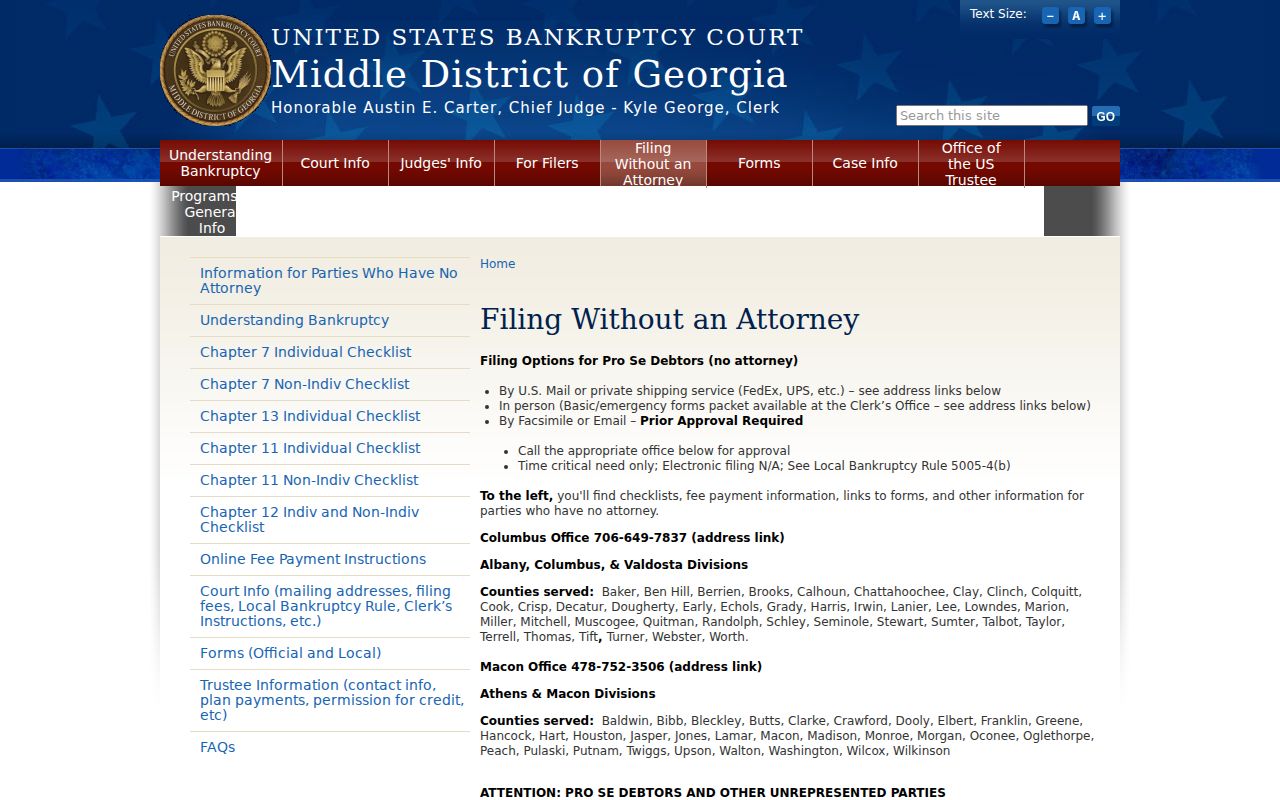
The same distinction shows up in Hart's state systems, where filing through a provider does not by itself produce a certified case record. The bankruptcy case-information page spells out the separate federal case route.
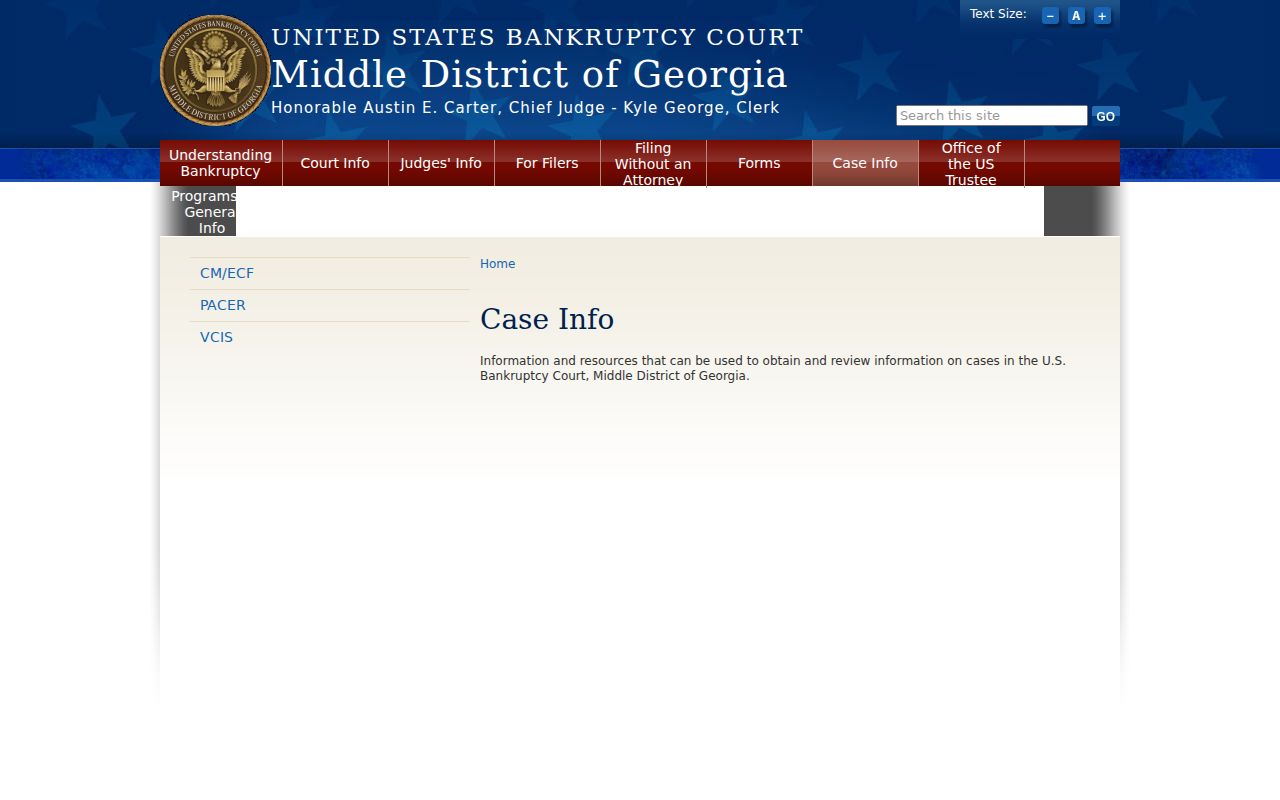
Bankruptcy filings belong to the federal court, not a Hart County clerk. The official PACER service is the government site that opens federal dockets to the public.
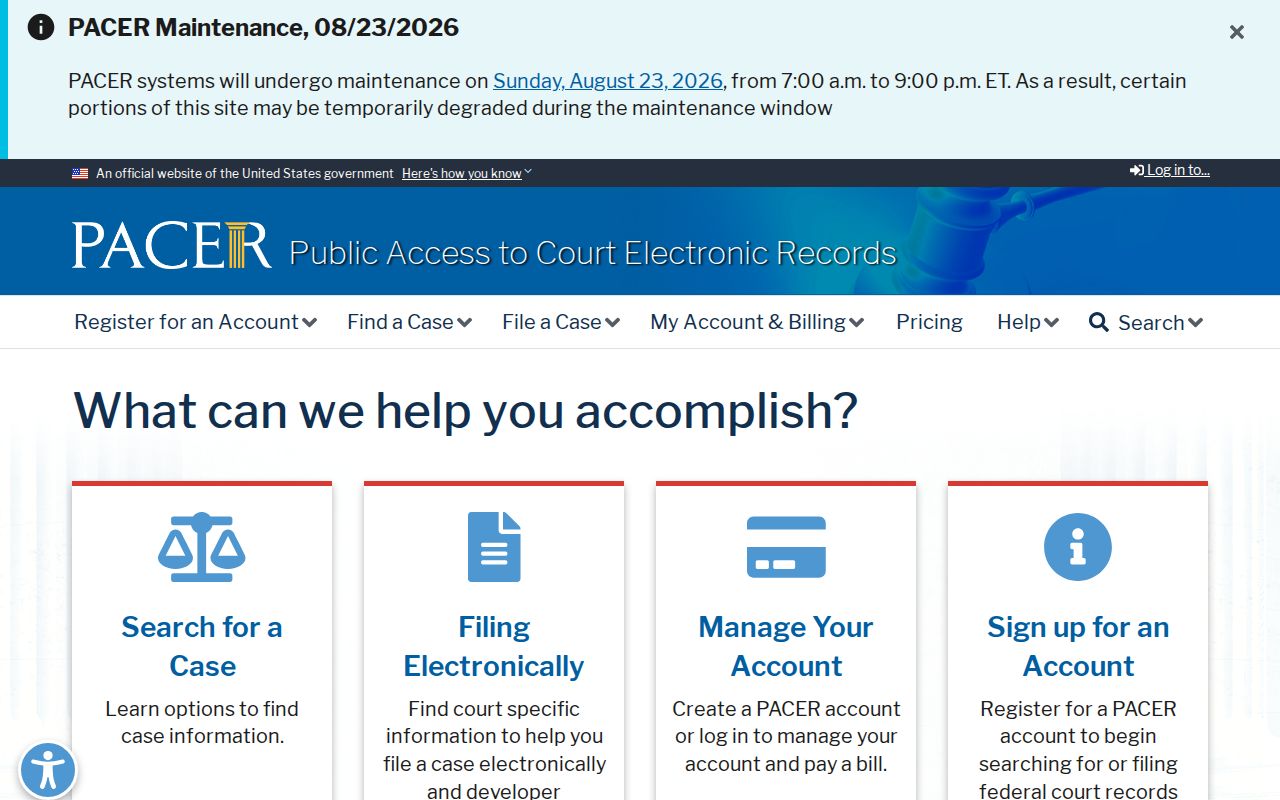
PACER covers federal dockets only. It does not replace ICON, the Hart County Clerk of Superior Court, or the lower-court clerks for Hart County records.