
Searching Hart County Civil Dockets
Hart County splits its civil docket work across courts. Superior Court takes the big claims. It also handles divorce, title, family matters, and anything not assigned elsewhere. Magistrate Court handles claims up to its published $15,000 limit. That includes Statements of Claim, garnishments, foreclosures, dispossessories, and interrogatories. Probate Court holds the estate and guardianship files. A city ordinance case stays in municipal court.
For Superior civil research, the Hart County Clerk routes people to ICON. Its public screen requires a login. Without an authorized account, call the Superior Clerk at 706-376-7189 or go to the counter. Magistrate cases go through the Hart Magistrate Court contact route. Give the clerk the court and the filing year. Add a case number or exact caption, plus the record type you need.
- Identify Superior, Magistrate, Probate, or municipal jurisdiction.
- Use ICON only with an authorized account.
- Search by the exact case number when known, or provide the full party caption.
- Review the entries for filings, motions, settings, orders, and disposition.
- Ask the clerk for the docket, pleading, signed judgment, or certified copy actually needed.
Hart Civil Courts Split at $15,000
The $15,000 line is the published Magistrate limit. Treat it as a routing clue, not a guarantee that every smaller dispute lands in Magistrate. Subject matter and procedure still control. Superior Court keeps broad jurisdiction over major civil cases, divorce, title disputes, and family matters, while Probate estates and guardianships run as their own separate stream of court records.
| Court | Typical Hart civil work | Research route |
|---|---|---|
| Superior | Major civil, divorce, title, family | ICON account or Superior Clerk |
| Magistrate | Claims within $15,000 and listed filing types | Magistrate clerk |
| Probate | Estates and guardianships | Probate Court |
| Municipal | City ordinance matters | Issuing city |
What if the case does not turn up? Check the other Hart courts before assuming a record is sealed or missing.
Inside a Hart County Civil Docket
A civil docket is a chronological register of case activity, not the whole case file. It can show parties, attorneys, the judge, case type, filing date, pleadings, motions, hearings, orders, and current status. It lists a document by name. That does not mean the docket gives you the image itself. Beyond the account gate, Hart's own number formats, service columns, judgment fields, default labels, and image prices are hidden. None of that is on public display.
| Case identity | Case number, type, court, filing date, and status. |
|---|---|
| Parties | Plaintiff, defendant, and public attorney information. |
| Filings | Complaint or claim, answer, motions, and later documents. |
| Hearings | Public setting date, hearing type, judge, and place when available. |
| Outcome | Dismissal, judgment, order, or other recorded disposition. |
When an entry alone does not answer your question, ask the clerk for the filed document or signed order. A docket printout is not automatically certified.
Hart Civil Filing Is Not Searching
Three systems, three different jobs. ICON serves as the local research route for Hart Superior civil and criminal records. PeachCourt is mandatory for Hart Superior e-filing. For its part, Hart Magistrate links eFileGeorgia for Statements of Claim and dispossessory filings. The eFileGeorgia page itself carries account and verification controls. It is not a public grid of Hart case results.
| System | Hart role | Do not assume |
|---|---|---|
| ICON | Superior case research | Anonymous search; login is visible |
| PeachCourt | Superior e-filing | Free guest docket access |
| eFileGeorgia | Magistrate online filing | Public document lookup |
| Georgia E-Access | Provider directory | One statewide database |
Filing credentials do not replace the clerk. For an older file, a paper copy, a certification, or an explanation of access, contact the office that holds the record.
Civil Case Types on the Docket
Civil work in Hart County spans more than one court and more than one remedy. A Superior civil docket can hold contract, tort, property, divorce, custody, and other family matters. Those show up where they stay public. Magistrate posts a more specific local menu of claim types. Probate estates count as civil in a broad sense. But they are not ordinary Superior civil cases.
- Statement of Claim: a Magistrate civil claim within the court's jurisdiction.
- Garnishment: a process involving property or funds held by another party.
- Foreclosure: a listed Magistrate filing type with local instructions.
- Dispossessory: a statutory proceeding concerning possession of property.
- Interrogatory: the listed post-judgment filing type with a service charge.
A statewide role matrix lists broad civil categories. Hart's own ICON dropdown may not carry every label, so verify locally.
Hart Magistrate Civil Filing Fees
Hart Magistrate publishes fees effective July 1, 2024. It notes that all filing fees rose by $4 on that date. Keep in mind what these figures are. They are filing amounts, not charges for a docket search, copies, or certification. The official court controls the amount and payment method. So confirm current costs before you file.
| Filing | Published amount |
|---|---|
| Statement of Claim | $108 for one defendant; $50 each additional defendant |
| Garnishment | $108 |
| Foreclosure | $108 |
| Dispossessory | $108 |
| Interrogatory | $10 plus $50 service, $60 total |
Hart posts no separate plain-copy, certified-judgment, search, image, or civil-record mailing fee. Ask the clerk for a quote rather than treating a filing fee as the record fee.
Civil Docket Settings and Hearings
A setting entry schedules one step in a civil case. It might be a motion hearing, a status event, a conference, the trial, or another proceeding. It is not always the final trial date. One scheduling order can set several deadlines. A later continuance or amended order can shift one or more of those dates.
For Superior matters, check the Hart Clerk court calendars first. Then confirm the case-specific setting with the clerk or the court itself. The posted 2026 source is a scanned annual PDF rather than a live grid of results. Emergency orders or a facility change can override an earlier location. So double-check close to the date.
When time is short, do not wait on an open-records response. Call the court listed on the notice. Use the Hart County Court Dates reference for each confirmation channel.
When a Hart Civil Case Is Missing
A blank search proves nothing. The miss could come from the wrong court, a misspelled caption, an old index, an account gate, delayed data, or restricted access. Hart offers no unified public database combining Superior, Magistrate, Probate, and municipal records, so a case lookup has to target the right court.
- Confirm the court and county on the notice.
- Check the filing year and whether the file uses an older index.
- Use the full case number or exact caption, not just a common surname.
- Ask whether ICON, PeachCourt, or eFileGeorgia visibility differs from clerk custody.
- Request a redacted public copy or legal basis if access is limited.
Deadline pending? Contact the clerk or court directly. A portal search is not a safe substitute for confirming an active deadline.
Civil Docket Access Rules
Public access never exposes every item in a civil file. Family matters can hold protected information. Adoption and juvenile records face stronger limits. Personal identifiers may be redacted, and a judge can seal material under the governing court rules. Even then, the docket entry may stay visible while the document image stays restricted.
Key rules and request paths:
Uniform Superior Court Rule 21 addresses public access and sealing in Superior Court.
Georgia Open Government FAQ explains response timing, search costs, and copy charges for covered records.
Georgia request guidance recommends a clear request to the proper custodian.
Georgia's open-government guidance gives an office three business days to answer a records request. It also lets that office charge for search and retrieval once the work passes the first 15 minutes. A civil docket file still answers to court rules, statutory exemptions, and any sealing order on the case. So access to the Hart County file follows those limits rather than the guidance alone.
The two official Attorney General guidance pages lay out that request framework. Use them as support. But the Hart County clerk's own court-file process governs the actual civil record.
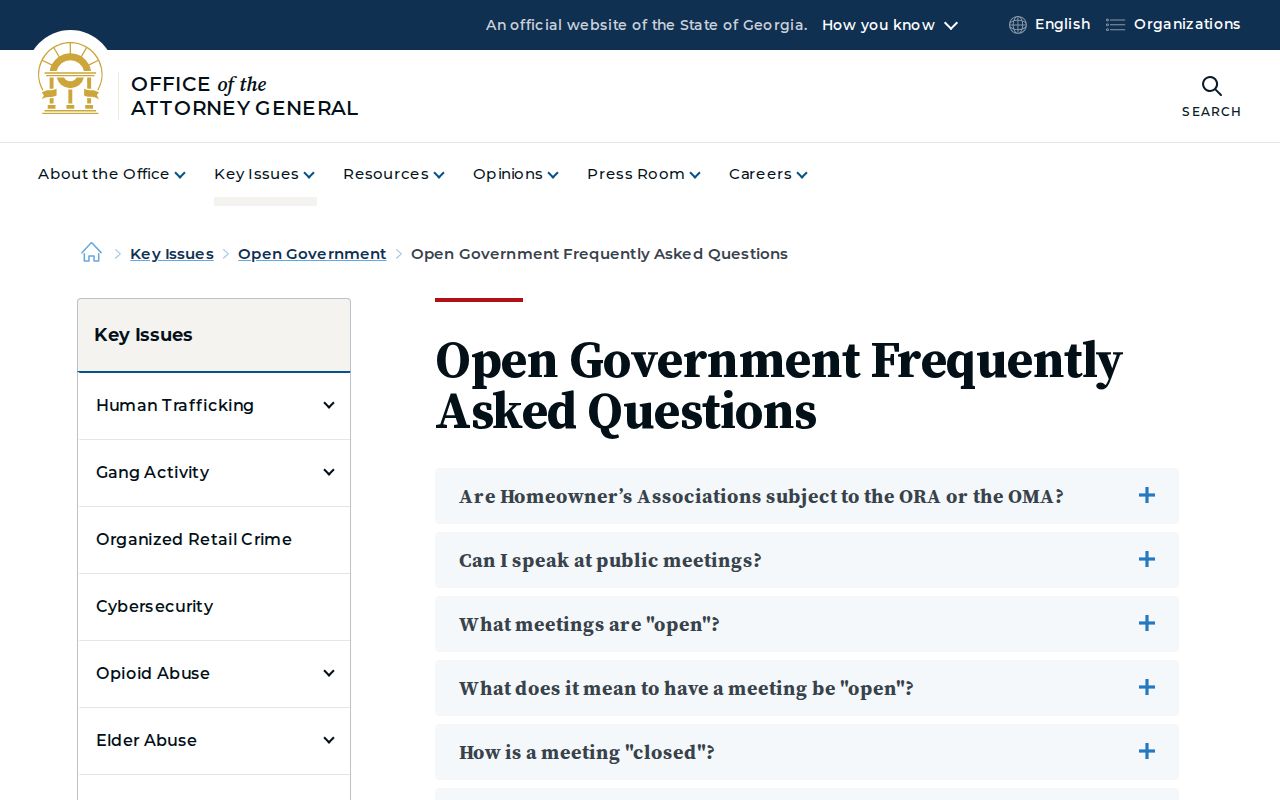
The FAQ explains statewide access principles and permitted charges.
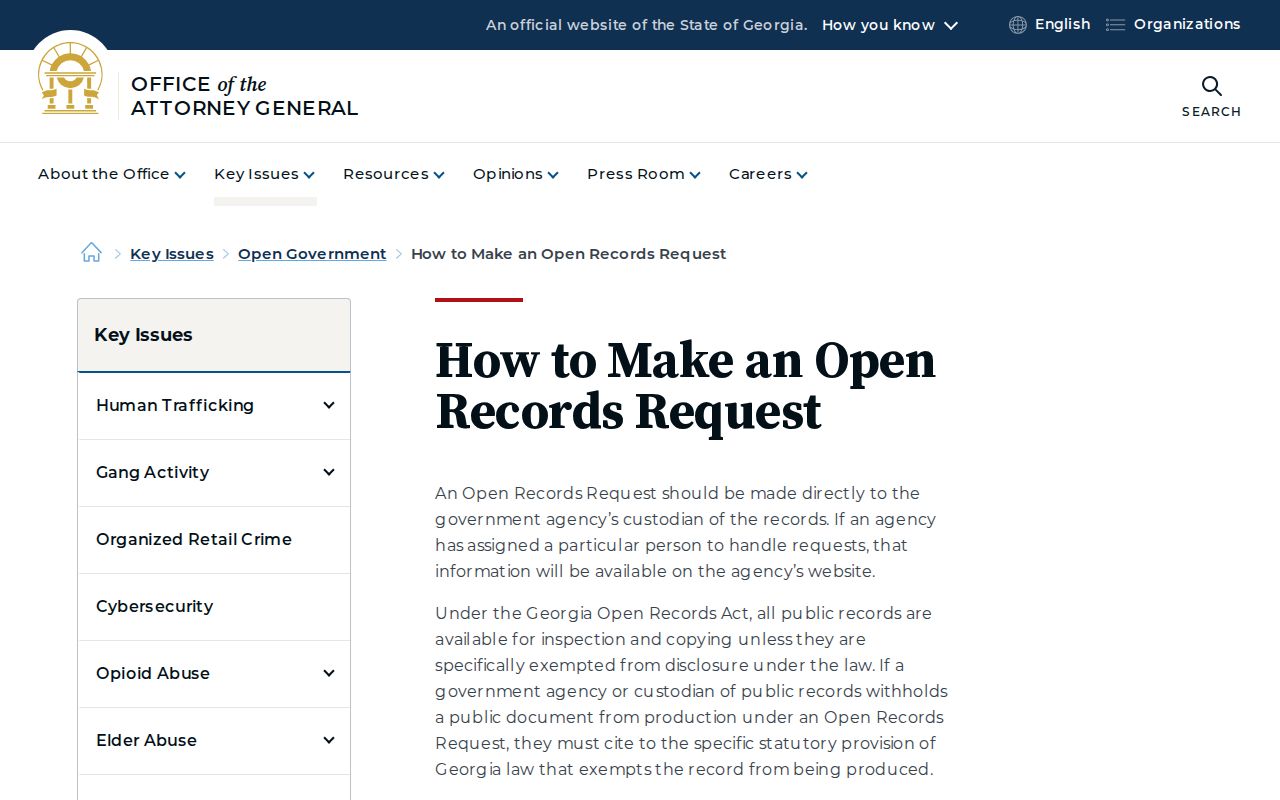
Direct a narrow request to the office that actually keeps the Hart civil record.
Older Hart Civil Records Need Context
Fire struck the Hart County courthouse in 1900. It struck again in 1967, and the current building was finished in 1971. Building dates tell you nothing about when electronic case files began. An older civil docket may sit in bound volumes. It may sit in index books, microfilm, scans, or archived files. The online coverage years were never published.
The county's 2022 comprehensive plan describes scanning and indexing work on deeds, liens, and criminal and civil filings. It also notes storage and access needs. That is not proof that every historic docket or image is online. When you contact the clerk about older indexes, give an approximate year. Add the party caption, the court, and the type of record you want.
Say what product you need up front. For a certified judgment, ask for exactly that. For simple research, ask whether inspection or a plain copy will do. The clerk can walk you through the available form, the cost, and certification.